
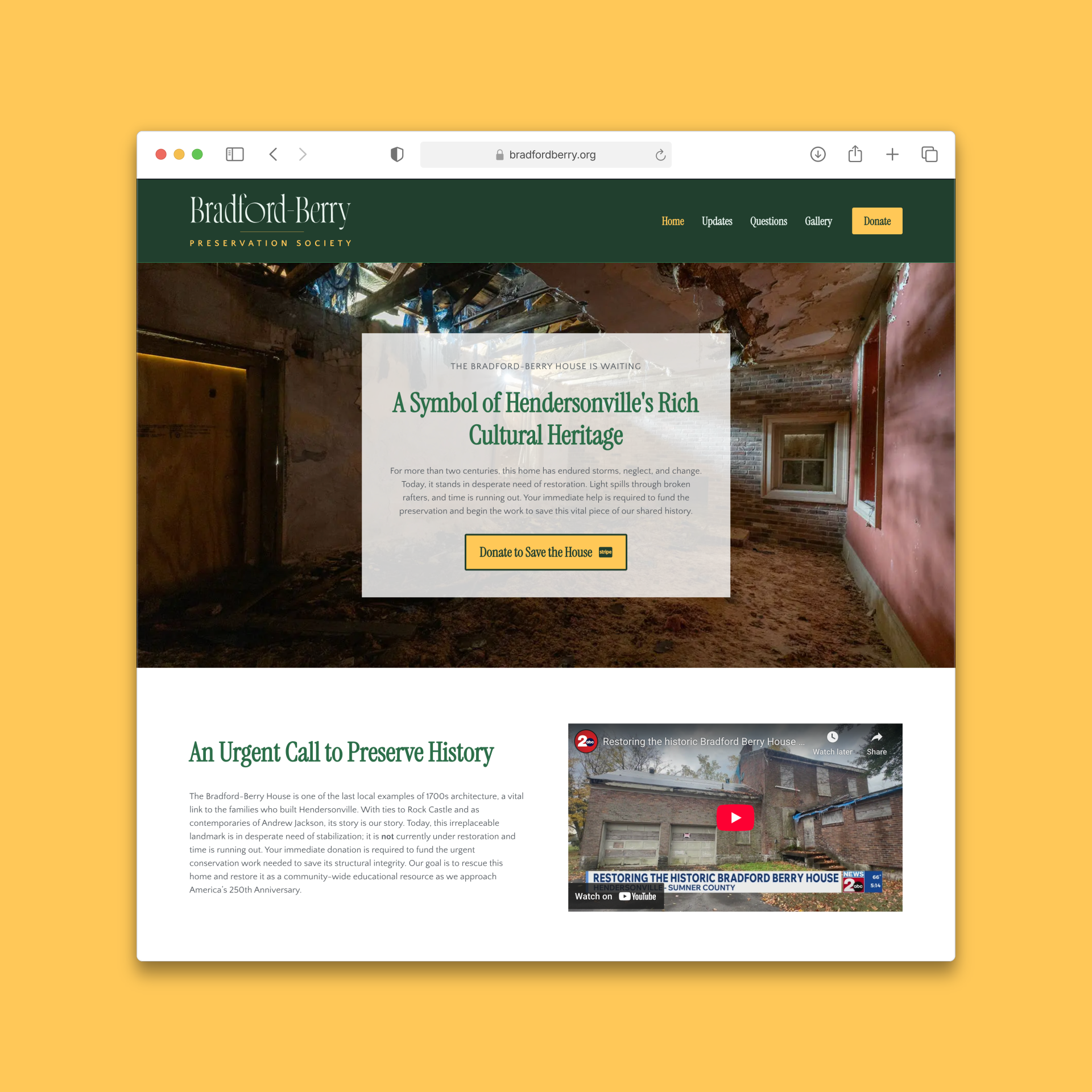
BradfordBerry.org Homepage
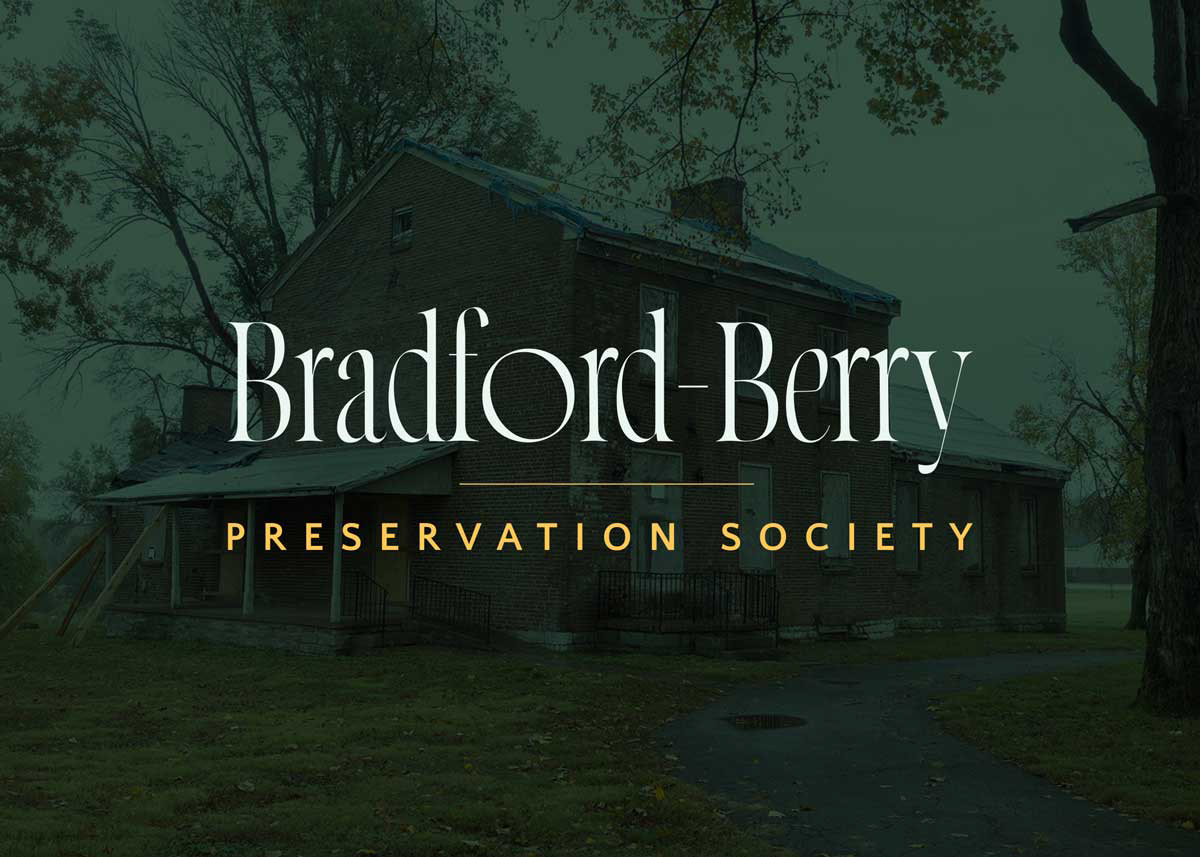
A bespoke Share Image ties together the physical house and the digital branding.
The Bradford–Berry House is a historic estate in Hendersonville, Tennessee, stewarded by a nonprofit organization dedicated to preservation, restoration, and public education. As the United States approaches its 250th anniversary in 2026, the site stands as a rare local connection to national history—linking the Revolutionary era, early frontier settlement, and twentieth-century military service tied directly to modern Nashville.
The property reflects the legacy of two intertwined families. Henry Bradford, born in 1758, served in the Continental Army during the American Revolutionary War as a member of the Third Virginia Regiment. Wounded in service and later awarded land warrants, he carried the ideals of independence westward, helping establish early frontier defenses near Drake’s Creek in the 1780s. His brick homestead became one of the earliest permanent homes in what would become Sumner County, symbolizing stability in a developing republic. Bradford later served as Revenue Collector for the Ohio Territory under Presidents John Adams and Thomas Jefferson, helping establish federal authority during the nation’s formative constitutional years.
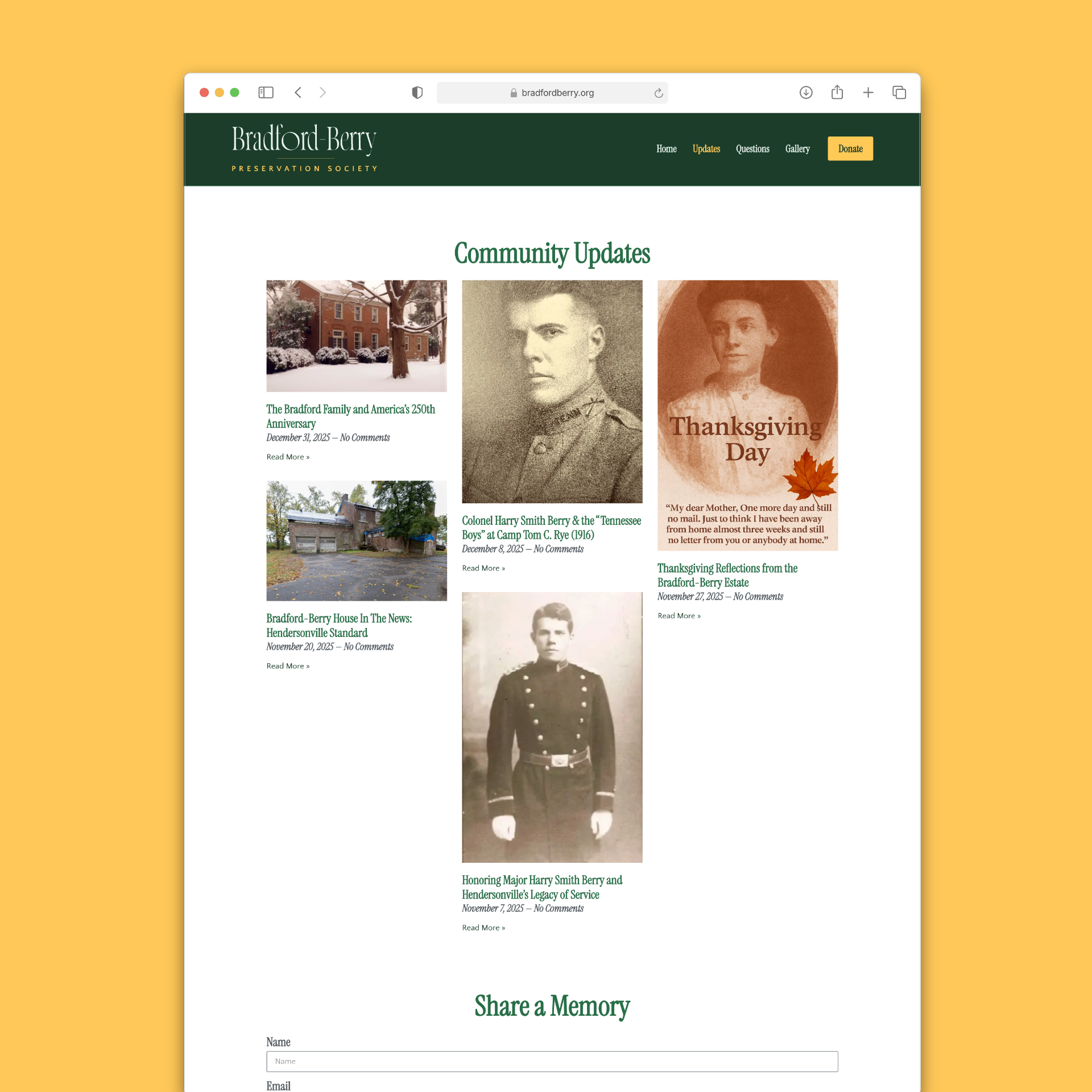
That tradition of service continued through the Berry family. In the early twentieth century, Major—later Colonel—Harry Smith Berry led the “Tennessee Boys” of the First Tennessee Infantry during the period of heightened tensions along the Mexican border in 1916. While awaiting deployment, Berry brought his troops to the family farm in Hendersonville for training, turning the property into an active site of military preparedness. Contemporary newspaper accounts describe townspeople lining the roads as soldiers marched through the village and raised tents beneath the trees on the Berry land—illustrating a community that did not merely observe history, but participated in it.
Berry’s legacy extends directly into Nashville’s modern identity. Berry Field, named in his honor, later became Nashville International Airport (BNA), embedding the family’s contribution to national service into the daily life and growth of the region. The Bradford–Berry House remains one of the last tangible links connecting early American nation-building, local military service, and the infrastructure of a rapidly growing city.
My work on the project focused on translating this layered history into a credible, modern institutional foundation. I defined a clear narrative framework emphasizing ongoing preservation, the necessity of financial support, and active community participation. The site was intentionally designed as a foundational system—minimal, legible, and scalable—capable of supporting future campaigns, education initiatives, and anniversary-driven storytelling.
In parallel, I designed a restrained wordmark to provide the organization with a stable visual anchor during this early phase, optimized for longevity and cross-platform use rather than expression. Operational credibility, accessibility, and fundraising infrastructure were integrated from the outset to ensure the site functioned as a stewarded institutional asset rather than a temporary campaign.
The result positions the Bradford–Berry House not as a static landmark, but as a living civic institution—connecting national history to local place, and preservation to ongoing public trust.